Independent new home advocacy

Independent Building Inspections Throughout Your Build

Independent building inspections provide another qualified set of eyes on work at important stages of a new home build, before concrete, plasterboard, or tiles conceal it. New Build Assist helps arrange independent inspectors, who assess the work and provide reports directly to you.

Building a new home involves dozens of different tradespeople, each responsible for a particular part of the construction process. Even with a good builder and an experienced site manager, no one can watch every trade every minute of the day.

And that's where problems can arise.

A small mistake, an overlooked detail or poor workmanship may not be obvious once the next stage of construction begins. Structural components get covered by plaster, waterproofing disappears behind tiles, and important details can become impossible to inspect without pulling finished work apart.

That's why independent building inspections at the right stages of construction are so important.

It's not about assuming your builder is doing the wrong thing. It's about recognising how complex building a home really is, and introducing another layer of professional checking to help achieve a better outcome.

For most Australians, building a home is one of the largest financial commitments they'll ever make. Independent inspections are a sensible precaution to plan for from the beginning, rather than something to consider only after problems appear.

Why timing matters

Why the Timing of Inspections Matters

One of the biggest challenges with building a home is that much of the work becomes concealed as construction progresses.

Once concrete has been poured, walls have been plastered or waterproofing has been covered by tiles, checking the work underneath can become extremely difficult without removing finished materials.

And if something is wrong, fixing it later can be considerably more complicated and expensive than addressing it while the work is still exposed.

I've experienced this firsthand.

When I built my own home, I noticed that a plumber had cut through a structural floor component to run pipework. I suspected something was wrong, but I didn't have the technical knowledge to confirm it.

Fortunately, I took a photograph of the damage.

By the time I engaged an independent inspector, the damaged component had already been concealed behind plaster. However, because I had taken that photograph, the inspector was able to assess what had happened and confirm that it was a problem.

The plaster had to be cut open so the builder could rectify the damaged structure.

Without that photograph, the damage may never have been discovered.

That's why the timing of independent building inspections is so important.

Had an independent inspection been carried out before the plaster went on, the damaged component could have been identified and addressed while it was still accessible.

The aim is to identify potential problems at the stages when they can still be seen, assessed and addressed, before the next stage of construction makes them harder to access.

At every important stage

What Gets Inspected During Construction?

A home is built in stages, and each stage brings different things that need to be checked.

Some of the most important inspections take place before work is covered by concrete, plasterboard, tiles or other finishes. Once those materials are installed, certain parts of the construction may no longer be accessible for inspection.

That's why I believe in arranging comprehensive independent building inspections throughout construction, rather than relying on a single inspection when the home is finished.

The intended inspection coverage includes the following important stages.

1

Pre-Slab Inspection

Before the concrete is poured.

This is one of the earliest opportunities to check important parts of your home's foundations.

Depending on the design and the inspector's agreed scope, the inspection may include the footing and slab preparation, formwork, reinforcement, moisture barriers, service penetrations and other visible details against the relevant plans and specifications.

Once the concrete is poured, much of this work is permanently concealed.

Identifying potential issues beforehand gives the builder an opportunity to address them while the components are still accessible.

2

Frame Inspection

After the structural frame has been erected, before important components are concealed.

The frame forms a major part of your home's structure.

An independent inspector may examine visible framing components, bracing, tie-down connections, roof framing, structural openings and other relevant construction details.

3

Pre-Plaster Inspection

Before internal walls and ceilings are lined with plasterboard.

This is another important opportunity to examine work that will soon be hidden.

Depending on the timing and inspection scope, an inspector may review accessible framing, service penetrations, insulation and other visible construction details before the internal linings are installed.

The aim is to identify issues that might otherwise remain concealed inside the walls and ceilings.

By this stage, several different trades may have worked within the structure, creating opportunities for damage or unintended alterations to framing and other components. A pre-plaster inspection provides another opportunity to identify potential issues before they're concealed behind walls and ceilings.

4

Waterproofing Inspection

After waterproofing has been applied, but before it's covered by tiles or other finishes.

Bathrooms, showers, laundries and other wet areas depend on correctly installed waterproofing to prevent moisture reaching parts of the building that should remain dry.

An inspection may assess accessible waterproofing membranes, junctions, corners, penetrations and other visible installation details within the inspector's agreed scope.

Waterproofing is particularly important because once tiling is completed, much of the membrane is no longer visible.

If a problem is identified after the room is finished, investigating or rectifying it may involve removing tiles and other materials.

5

Fixing Inspection

As the internal fit-out approaches completion, generally before final painting and finishing.

By this stage, the home is beginning to look much more like the finished product.

An inspector may assess visible workmanship involving plasterboard, cornices, internal doors, architraves, skirting boards, cabinetry, joinery and other installed components, depending on the stage of construction.

This inspection provides an opportunity to identify workmanship issues, incomplete items and other concerns before the final finishes are applied.

It can also help identify matters that might otherwise carry through to practical completion.

6

Practical Completion Inspection

When the builder considers the home substantially complete, before handover.

This is a comprehensive inspection of the finished home.

The inspector may assess accessible areas of the property, looking for visible defects, incomplete work, workmanship issues and items that may not meet the agreed plans, specifications or applicable requirements.

This can include internal and external finishes, doors, windows, fixtures, fittings, wet areas and other accessible parts of the home.

The inspector documents their findings in a report so that identified matters can be raised with the builder and addressed through the appropriate completion process.

Although this is an important inspection, it cannot replace earlier stage inspections. Many structural and concealed elements of the home are no longer visible.

7

End-of-Defects-Period Inspection

After you've moved in and had time to live in the home, but before your contractual defects period ends.

Some problems only become apparent after you've been living in your new home.

Doors may begin sticking, cracks may become visible, fittings may not operate as expected, or other issues may emerge through normal use.

A further independent inspection provides an opportunity to document visible defects and concerns that have developed since handover.

The findings can then be raised with the builder within the applicable contractual timeframe.

The name and length of the defects period vary depending on your contract, builder and state or territory. It is important to understand the relevant dates and not confuse the contractual defects period with any separate statutory warranty rights.

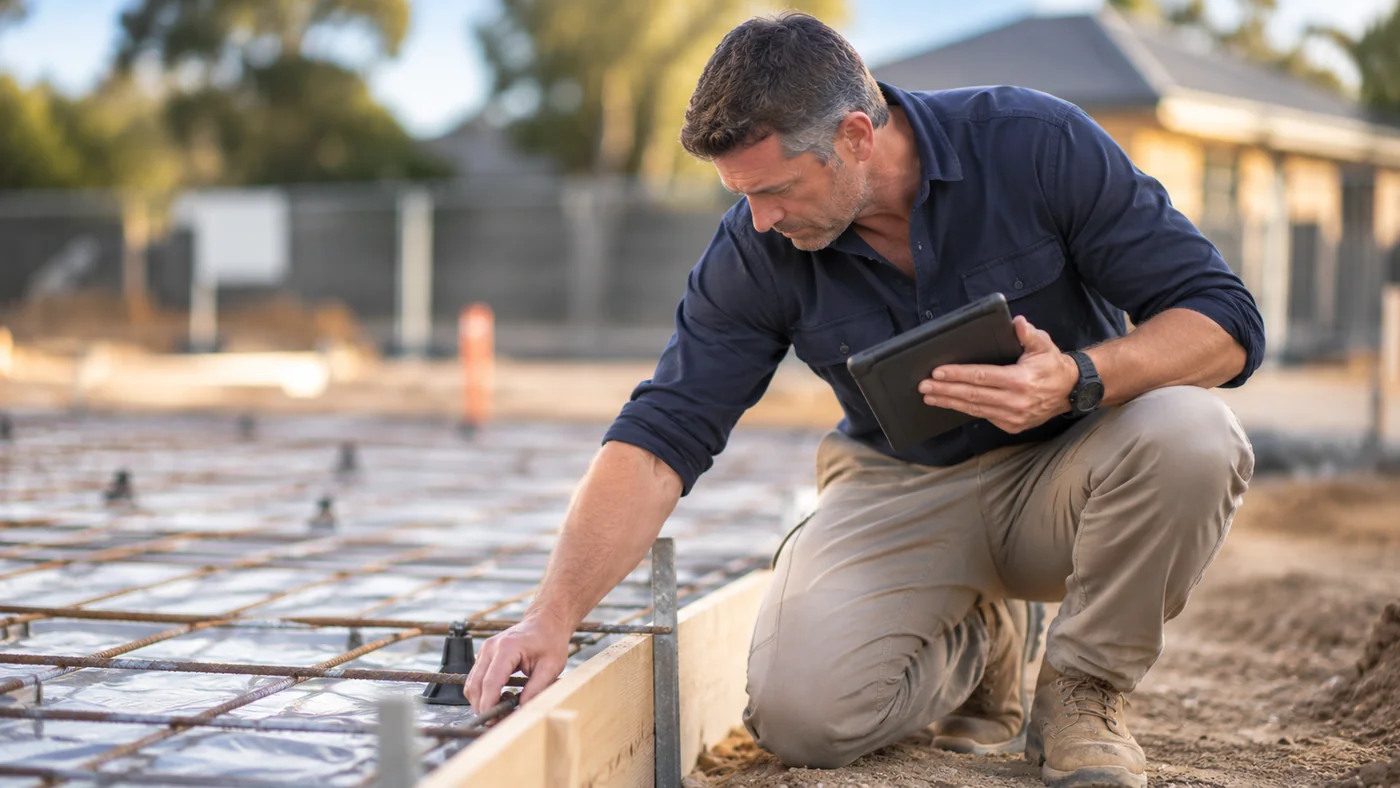
Illustration of an inspector checking reinforcement and slab edge formwork before a residential concrete pour
Illustrative image of a residential pre-pour inspection.

A Note About Inspection Stages

Different inspection companies may use different names for these stages or combine certain inspections into fewer visits.

The exact scope will also depend on your home, its construction method, the inspector's services and the work that is accessible at the time.

What matters most isn't the number of inspections. It's making sure the important work is checked at the appropriate time, while it can still be properly assessed.

These independent inspections provide an additional layer of checking. They don't replace the builder's responsibilities or the mandatory inspections and approvals required by the relevant building authority.

How I Arrange Independent Building Inspections

Before construction begins, I arrange for qualified independent building inspectors to assess your home at the important stages of construction.

The inspections are carried out by third-party professionals who are independent of your builder. Their responsibility is to assess the relevant work and provide written reports of their findings.

You receive the inspection reports directly, so you have a record of what has been checked and any issues identified.

I'll help you understand the findings and, where something needs attention, assist you in raising it with your builder and following up on the response.

The aim is to identify and address potential problems as early as practical, working constructively with your builder rather than creating unnecessary conflict.

Independent inspections don't replace your builder's site manager. They provide another qualified set of eyes throughout the construction process.

Who Pays for the Independent Building Inspections?

You pay the independent inspection company directly for the inspections carried out on your home.

New Build Assist arranges and coordinates the inspections, but I don't receive or handle the inspector's payments. You also receive the inspection reports directly.

The cost will depend on several factors, including your home's size and complexity, its location, the inspection company and the number and scope of inspections required.

I'll research suitably qualified independent building inspectors who service your area, check their availability, and help you compare their experience, inspection coverage and pricing so we can identify an appropriate provider for your project.

Before construction begins, I'll also help you understand the proposed inspection schedule and expected costs, so you can allow for them in your overall building budget.

I believe comprehensive independent building inspections are an important investment in the quality of your new home, and something worth budgeting for from the beginning.

What Independent Building Inspections Can and Cannot Do

Independent inspections provide an additional layer of professional checking throughout construction, helping identify potential defects, workmanship issues and other concerns at important stages of the build.

However, no inspection can guarantee that every possible defect will be identified. Inspectors can only assess the work within their agreed scope and what is reasonably accessible at the time.

Independent inspections also don't replace the builder's responsibilities, site management or mandatory building inspections and approvals.

If an issue is identified, the inspector provides the technical findings, and I'll help you understand the report, communicate with your builder and follow up on the response.

The objective is to identify and address potential problems early, support better workmanship and help achieve a quality outcome for your new home.

Why It's Important to Plan Building Inspections Early

Independent inspections are most valuable when they're planned from the beginning, rather than arranged after something has already gone wrong.

Some of the most important inspection opportunities occur early in construction, and once work has been covered, those opportunities may be lost.

Planning ahead allows us to identify suitable independent inspectors, agree on the inspection stages, understand the costs and establish how inspections will be coordinated with your builder.

It also gives your builder advance notice of the independent inspections, allowing them to be incorporated into the construction schedule.

There's another benefit I've seen firsthand throughout my years working in construction.

When tradespeople know their work will be independently inspected, they're often more inclined to take extra care and check their workmanship before moving on.

From my experience, knowing an independent inspector will be checking the work can encourage tradespeople to get things right the first time, rather than risk having to return later to rectify something that could have been addressed while they were on site.

This doesn't mean tradespeople generally do poor work without inspections. It's simply an additional level of accountability that can encourage greater attention to detail.

Independent inspections aren't just about finding problems. They can also help prevent them.

That's another reason I believe inspections should be planned from the beginning and made part of the normal construction process.

Give Your New Home the Attention It Deserves

Independent building inspections are an important part of building a quality home, and the best time to plan them is before construction begins.

If you're planning to build, we can start with a 30-minute conversation about your project, followed by a Personalised Build Plan to help you understand your next steps.

No cost. No obligation. Just a better place to start.

Start My Build Plan